This is adapted from a LinkedIn post.
I’m no longer reading Hebrew in shul.
It has been more years than I care to admit since my bar mitzvah, and my ability to read Hebrew since then has dropped from “eh, I guess that’s not bad” to “who does this guy think he’s kidding?”
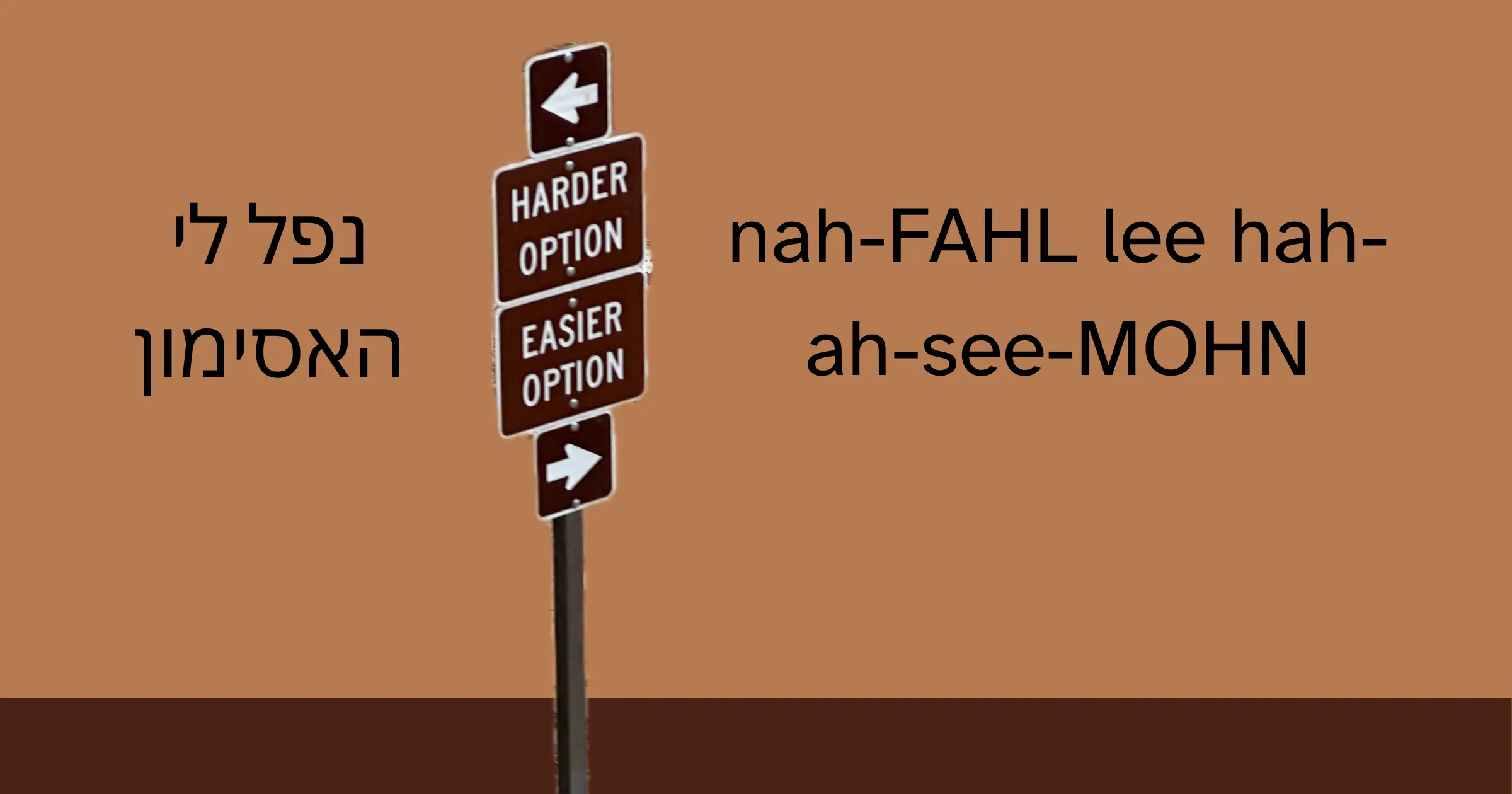
Yet I stubbornly stumbled through every letter, syllable, and word, falling behind everyone else and unable to enjoy the service. The English pronunciations were right next to the Hebrew words, but switching to them, I thought, would be cheating. No, not just cheating. An admission of failure.
Three days ago, as I mangled yet another passage in the Yom Kippur service, I had an a-ha moment.1 The transliteration wasn’t there to taunt me. It was there to help me.
I’m sure the folks who put together these kinds of books are fluent in Hebrew. But they were able to put themselves in the shoes of people like me who don’t read or write Hebrew well, or at all. That’s why everything is transliterated and translated.
One of the most important things I learned as a journalist is to assume the reader doesn’t know anything—but not to assume the reader is stupid. One of my three marketing rules is “don’t give readers homework.” Make the information they need easy to understand and find.
I had been wandering the desert for 40 years and just realized someone had given me a map before I took the first step. It was time to unfold it.
Footnote
- Or was this an a-CHa moment? The letter that makes that hard CH sound is virtually identical to the one that makes a regular H sound. They both look like a mirror image of the old Quebec Nordiques logo. ↩︎